Abaya Fabric Guide: Choosing the Right Material
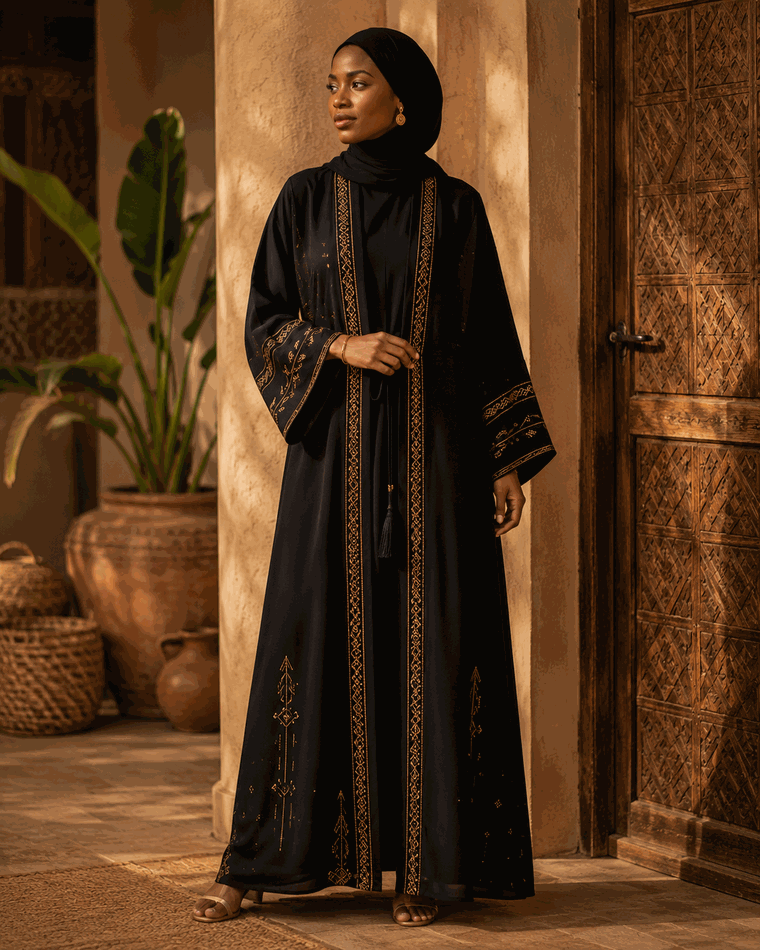
The fabric makes the abaya. The same design can look elegant or ordinary depending on how the cloth drapes, breathes and holds its shape. If you're choosing fabric for an abaya — to buy, to sew, or to order in bulk — this guide walks through the main options and when each one shines.
At Luméa we craft abayas in Surat and ship them across the Gulf and beyond, so these recommendations come from real production experience.
What to look for in an abaya fabric
Three qualities matter most:
- Drape — it should fall in soft, straight lines, not stand stiffly away from the body.
- Weight — medium weight hangs best and isn't see-through; too light looks flimsy, too heavy feels hot.
- Breathability — especially important in warm climates, where comfort depends on airflow.
Now the fabrics themselves.
Nida / crepe — the everyday favourite
Nida (a type of crepe) is the most popular abaya fabric for good reason. It's matte, fluid and wrinkle-resistant, with a beautiful, weighty fall. It suits daily wear, travels well, and flatters almost every silhouette. If you want one reliable all-rounder, this is it.
Satin — dressy and occasion-ready
Satin has a soft sheen that instantly reads as dressier. It's lovely for evening and event abayas, especially with embroidery or embellishment. Because it shows every mark and catches the light, it's best kept for occasions rather than daily errands.
Cotton and cotton blends — breathable and easy
Cotton is breathable, easy to care for and great for hot weather and casual styles. The trade-off is that it creases more than crepe. Cotton blends can add wrinkle resistance while keeping much of the comfort — a good middle ground for everyday summer abayas.
Chiffon and lighter fabrics — layering and detail
Chiffon is sheer and floaty, used mostly for layered designs, sleeves and overlays rather than a whole garment. It adds movement and elegance but usually needs lining.
Matching fabric to occasion and climate
- Everyday, warm climate: nida/crepe or a cotton blend.
- Formal evening: satin, or crepe with embellishment.
- Layered, detailed designs: chiffon overlays on a crepe base.
- Travel: crepe — it resists wrinkles and packs well.
A note on colour and care
Darker abayas hide marks and are the classic choice; lighter tones feel fresh but show more. Whatever the fabric, choose colourfast cloth and follow gentle care — cool wash, shade dry — to keep the finish looking new.
Frequently asked questions
What is the most comfortable abaya fabric for hot weather?
A breathable cotton or a lightweight nida/crepe. Both allow airflow while keeping a good drape.
Which fabric drapes the best?
Nida/crepe is the benchmark for drape — fluid, matte and weighty without being heavy.
Is satin good for everyday abayas?
Satin is better for occasions. It's beautiful but shows marks and catches light, so it's less practical for daily wear.
The bottom line
For most people, a good nida/crepe is the best everyday abaya fabric — elegant drape, easy care, all-climate comfort — with satin for occasions and cotton for heat. Explore our handcrafted abaya collection, or contact us for custom fabric, colours and sizing.

Luméa is a textile house in Surat, India — we design and handcraft African prints, kaftans, abayas and menswear, and ship worldwide. Everything you read here comes from our own workshop. Read our story →