Mud Cloth (Bogolan): The Complete Guide
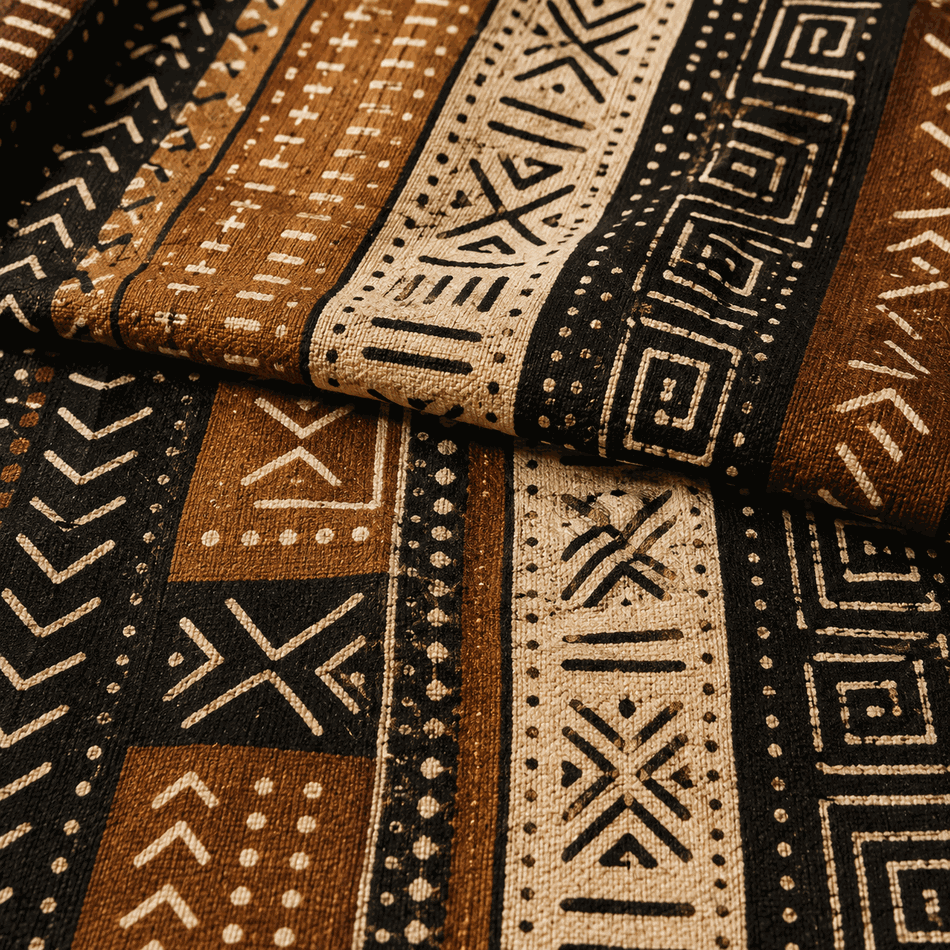
Bogolan — literally "made from mud" — is Mali's iconic hand-painted cotton, instantly recognisable by its earthy tones and bold geometric symbols. It has moved from Malian villages to global runways without losing its meaning.
How mud cloth is made
The process is slow and entirely by hand. Narrow strips of cotton are woven and sewn into a cloth, soaked in a dye bath made from crushed leaves, then hand-painted with fermented mud. The iron in the mud reacts with the leaf-dyed cloth to fix rich browns and blacks. The background is often bleached back to cream, leaving the pattern in negative.
Symbols and meaning
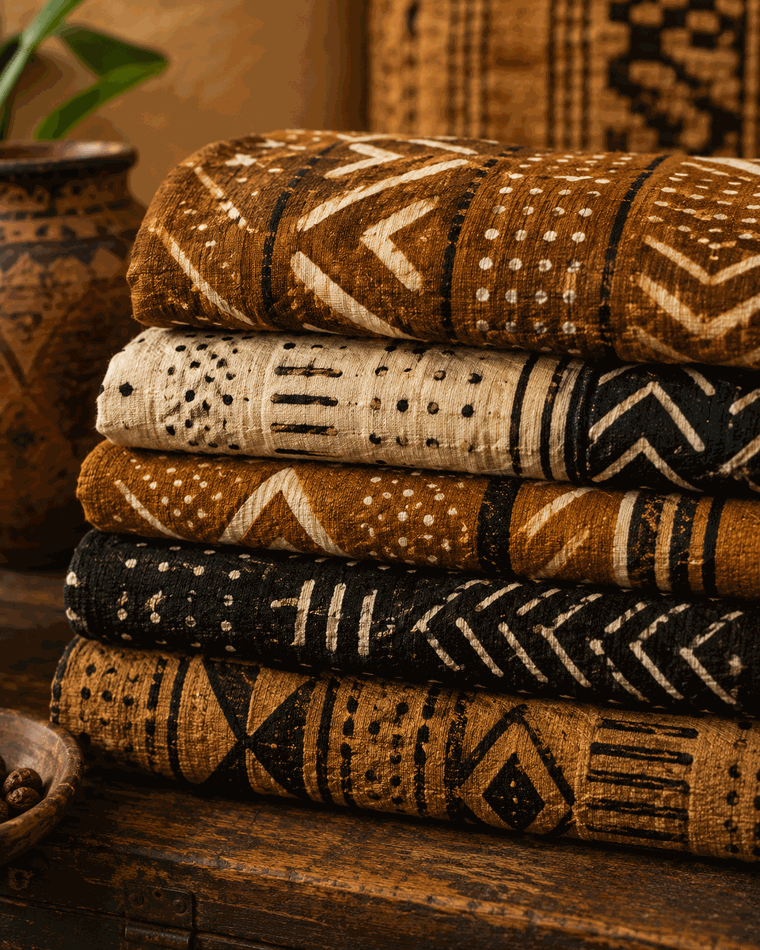
Traditionally, bogolan patterns are a form of communication — symbols can represent protection, proverbs, historical events, and a wearer's status or achievements. Hunters wore it for camouflage and ritual protection; women wore it at important life stages.
The modern look
Mud cloth trades bright wax colour for a natural, graphic palette of black, brown, rust and cream — which is exactly why interior designers and fashion labels love it. It works for jackets, waistcoats, cushions, throws and statement accessories.
How to style bogolan
Because the palette is neutral, mud cloth mixes easily with denim, black, khaki and leather. Use it as an accent — a jacket or bag — or go bolder head to toe. For more, see the African print fabric guide and outfit ideas.
Caring for mud cloth
Authentic bogolan is dyed with natural materials, so wash gently by hand in cold water, avoid bleach, and dry flat away from strong sun to protect the contrast.
Frequently asked questions
Is mud cloth actually made with mud?
Yes — genuine bogolan uses fermented mud as the dye. Many mass-market "mud cloth print" fabrics simply copy the look by printing it onto cotton.
What colours does mud cloth come in?
Traditionally black, brown, rust and cream. Modern versions add white-on-black and other combinations.
Explore African-print and heritage fabrics by the metre.

Luméa is a textile house in Surat, India — we design and handcraft African prints, kaftans, abayas and menswear, and ship worldwide. Everything you read here comes from our own workshop. Read our story →